Chat on WhatsApp

How UK Businesses Are Using AI to Reduce Operational Costs

Artificial Intelligence is no longer a futuristic technology reserved for large enterprises and global corporations. Today, businesses across the United Kingdom are actively adopting AI solutions to improve efficiency, streamline operations, and reduce operational costs. From small startups and growing SMEs to established enterprises, organisations are discovering that AI can automate repetitive tasks, improve decision-making, and help teams focus on more valuable work.

With rising labour costs, increasing customer expectations, and growing market competition, UK businesses are under constant pressure to do more with fewer resources. This is where Artificial Intelligence is proving to be a game-changer. AI-powered systems can analyse large volumes of data, automate workflows, provide real-time insights, and perform tasks that previously required significant human effort.

As AI technologies continue to evolve, businesses are finding new ways to leverage them to cut expenses without compromising service quality or productivity. In this article, we explore how UK companies are using AI to reduce operational costs and why AI is becoming an essential part of modern business strategy.

The Growing Adoption of AI in UK Businesses

The UK has become one of Europe’s leading hubs for AI innovation and adoption. Businesses across industries are investing in AI technologies to improve operational efficiency and gain a competitive advantage. Unlike traditional automation tools that follow predefined rules, modern AI systems can learn, adapt, and make intelligent decisions based on data.

Many organisations initially adopted AI to improve customer support through chatbots and virtual assistants. However, the technology has rapidly expanded into areas such as process automation, predictive analytics, supply chain management, human resources, finance, and cybersecurity.

The ability to automate complex business functions while continuously improving performance makes AI one of the most valuable investments for organisations looking to control operational expenses.

Automating Repetitive Administrative Tasks

One of the most effective ways businesses reduce operational costs through AI is by automating repetitive administrative work. Many organisations spend countless hours on routine tasks such as data entry, invoice processing, document management, scheduling, and report generation.

AI-powered automation tools can perform these tasks significantly faster and with greater accuracy than manual processes. By eliminating repetitive work, businesses reduce labour costs while allowing employees to focus on strategic and revenue-generating activities.

For example, an AI-powered system can automatically process invoices, verify payment information, and update accounting records without requiring human intervention. This not only saves time but also reduces the risk of costly errors.

Companies that automate administrative workflows often experience substantial productivity improvements while lowering overall operational expenses.

Reducing Customer Service Costs with AI Agents

Customer service departments are often one of the largest operational expenses for businesses. Hiring, training, and managing customer support teams requires significant investment. AI-powered customer service solutions are helping UK businesses address this challenge.

Modern AI agents can handle thousands of customer interactions simultaneously, providing instant support around the clock. Unlike traditional chatbots, AI agents understand natural language, maintain context, and resolve complex customer issues without human assistance.

These intelligent systems can answer questions, process requests, schedule appointments, track orders, and provide personalised support. As a result, businesses can significantly reduce support costs while improving customer satisfaction.

Many UK companies are using AI agents as the first line of customer support, allowing human representatives to focus on more complex and high-value interactions.

Improving Workforce Productivity

Labour costs represent a major expense for most businesses. AI helps organisations maximise productivity by enabling employees to work more efficiently and make better decisions.

AI-powered tools can assist teams by automating routine tasks, organising information, generating reports, and providing recommendations. Employees spend less time searching for information and more time focusing on strategic activities that contribute directly to business growth.

For example, sales teams can use AI to analyse customer behaviour, identify potential opportunities, and generate personalised outreach recommendations. Marketing teams can leverage AI to create content, optimise campaigns, and analyse performance data.

By improving productivity across departments, businesses achieve more output without increasing headcount, leading to significant cost savings over time.

Optimising Supply Chain and Logistics Operations

Supply chain management is another area where AI is helping UK businesses reduce operational expenses. Inefficient inventory management, transportation delays, and forecasting errors can result in substantial financial losses.

AI-powered systems analyse historical data, market trends, and operational metrics to optimise supply chain processes. These systems can predict demand fluctuations, improve inventory management, identify potential disruptions, and optimise delivery routes.

For logistics companies, AI can reduce fuel consumption, improve route planning, and minimise transportation costs. Retail businesses can use predictive analytics to maintain optimal inventory levels and avoid overstocking or stock shortages.

By making supply chains more efficient, businesses reduce waste, improve customer satisfaction, and lower operational costs.

Enhancing Financial Management and Forecasting

Financial management is critical for controlling business expenses and ensuring long-term profitability. AI is transforming how companies manage finances by providing advanced forecasting and analytical capabilities.

AI-powered financial systems can analyse spending patterns, identify cost-saving opportunities, detect anomalies, and generate accurate financial forecasts. These insights help organisations make informed decisions and allocate resources more effectively.

For example, AI can identify unnecessary expenditures, recommend budget adjustments, and predict future cash flow requirements. Financial teams can use these insights to improve planning and reduce the risk of costly mistakes.

Many UK businesses are now incorporating AI into their financial operations to gain greater visibility into expenses and improve overall financial performance.

Streamlining Recruitment and Human Resources

Recruitment and employee management can be expensive and time-consuming processes. AI-powered HR solutions are helping businesses reduce hiring costs while improving recruitment outcomes.

AI can automate candidate screening, analyse resumes, schedule interviews, and identify the most suitable applicants based on predefined criteria. This significantly reduces the time and effort required for recruitment.

Additionally, AI-powered employee engagement tools can monitor workforce satisfaction, identify retention risks, and recommend strategies for improving productivity and employee experience.

By streamlining HR operations, businesses can reduce administrative costs and build stronger, more efficient teams.

Reducing IT and Cybersecurity Costs

Cybersecurity threats continue to increase as businesses become more reliant on digital technologies. Managing security risks manually requires substantial resources and expertise.

AI-powered cybersecurity systems can monitor networks, detect threats, and respond to suspicious activity in real time. These systems continuously analyse patterns and identify potential vulnerabilities before they become serious issues.

By automating threat detection and response, businesses can reduce the need for large security teams while improving overall protection. Preventing security breaches also helps organisations avoid costly downtime, data loss, and regulatory penalties.

AI-driven cybersecurity solutions provide both financial and operational benefits, making them a valuable investment for businesses of all sizes.

Improving Decision-Making Through Predictive Analytics

One of the most powerful advantages of AI is its ability to analyse massive amounts of data and generate actionable insights. Businesses often struggle to identify trends, anticipate market changes, and make informed decisions quickly.

Predictive analytics solutions powered by AI help organisations forecast future outcomes based on historical and real-time data. These insights enable businesses to optimise pricing strategies, improve resource allocation, predict customer behaviour, and reduce operational inefficiencies.

Better decision-making leads directly to cost savings by helping companies avoid mistakes, improve planning, and allocate resources more effectively.


Real More- Why Every App Developer Should Use AI Frameworks in 2026


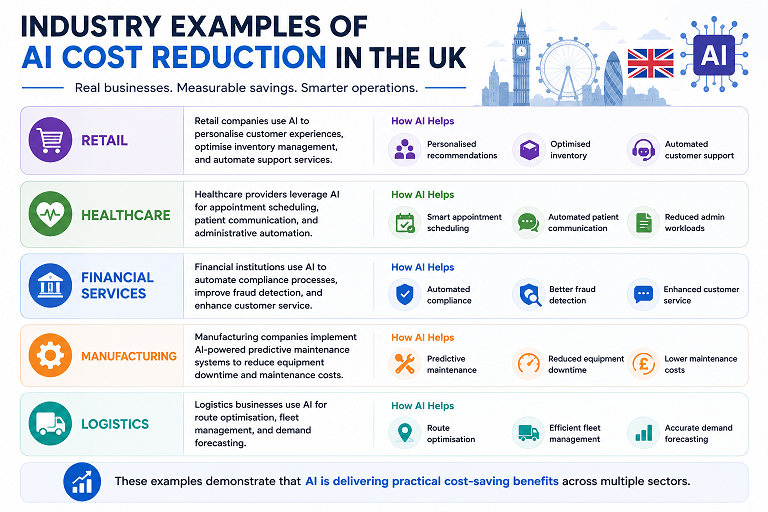
Industry Examples of AI Cost Reduction in the UK

Across the UK, organisations in various industries are already experiencing measurable benefits from AI adoption.

Retail companies use AI to personalise customer experiences, optimise inventory management, and automate support services.

Healthcare providers leverage AI for appointment scheduling, patient communication, and administrative automation.

Financial institutions use AI to automate compliance processes, improve fraud detection, and enhance customer service.

Manufacturing companies implement AI-powered predictive maintenance systems to reduce equipment downtime and maintenance costs.

Logistics businesses use AI for route optimisation, fleet management, and demand forecasting.

These examples demonstrate that AI is delivering practical cost-saving benefits across multiple sectors.

Challenges Businesses Should Consider

While AI offers substantial advantages, successful implementation requires careful planning. Businesses should assess their objectives, data quality, existing systems, and operational requirements before investing in AI solutions.

Choosing the right AI technology and development partner is critical to achieving desired outcomes. Organisations should focus on identifying processes where automation can deliver the greatest impact and ensure employees receive appropriate training to work alongside AI systems.

A strategic approach to AI adoption helps maximise return on investment while minimising implementation risks.

The Future of AI-Driven Cost Optimisation

The role of AI in business operations will continue to expand in the coming years. Advances in machine learning, generative AI, and autonomous systems will enable businesses to automate increasingly complex tasks and optimise operations at an unprecedented scale.

As AI technologies become more accessible, organisations that embrace innovation will gain significant advantages in efficiency, productivity, and profitability. Companies that delay adoption may struggle to compete with more agile and technology-driven competitors.

The future belongs to businesses that can effectively combine human expertise with artificial intelligence to create smarter and more efficient operations.

Conclusion

Artificial Intelligence is transforming how UK businesses manage costs and improve efficiency. From automating administrative work and customer support to optimising supply chains and enhancing financial management, AI is helping organisations reduce operational expenses while improving overall performance.

The ability to automate repetitive tasks, generate valuable insights, and improve decision-making makes AI one of the most impactful technologies available today. Businesses that strategically invest in AI solutions can achieve significant cost savings, improve productivity, and strengthen their competitive position.

As AI adoption continues to accelerate across the UK, organisations that embrace intelligent automation will be better equipped to navigate economic challenges and drive sustainable growth.

Why Choose DevsTree for AI Development?

At DevsTree IT Solution, we help businesses harness the power of Artificial Intelligence through custom AI development services designed to improve efficiency and reduce operational costs. Our team specialises in AI agents, machine learning solutions, intelligent automation platforms, predictive analytics, and enterprise AI applications.

Whether you want to automate customer support, optimise business processes, or develop advanced AI-powered software, we deliver scalable solutions tailored to your unique business goals and operational requirements.

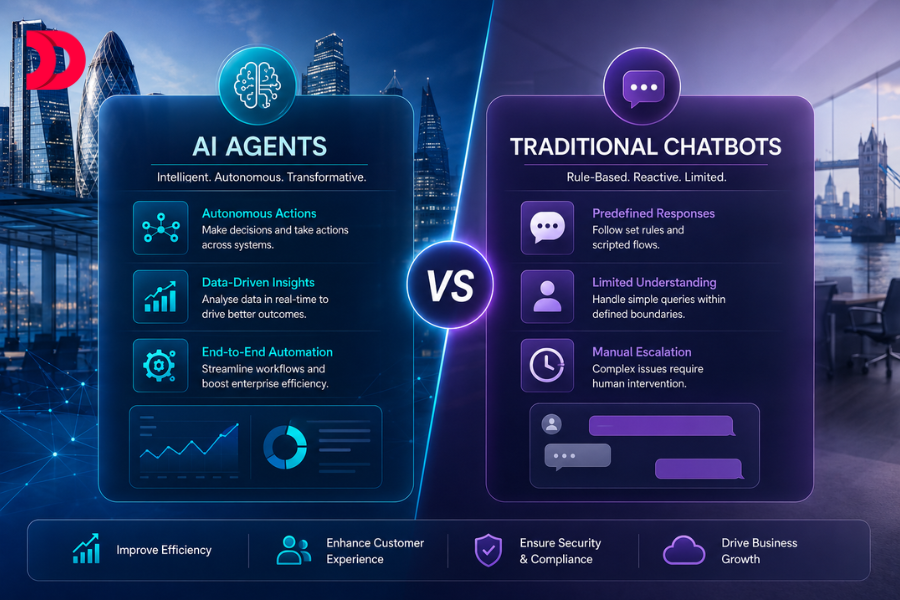
AI Agents vs Traditional Chatbots: What’s Best for UK Companies?

Artificial intelligence is reshaping the way businesses communicate with customers, manage operations, and drive growth. Across the UK, organisations are investing heavily in AI-powered technologies to improve customer experiences, reduce operational costs, and gain a competitive advantage. One of the most common questions business leaders face today is whether they should implement a traditional chatbot or invest in an advanced AI agent.

At first glance, both technologies may appear similar because they interact with users through conversations. However, the capabilities, intelligence, and business impact of AI agents and traditional chatbots are significantly different. While chatbots have been helping businesses automate basic customer interactions for years, AI agents represent a new generation of intelligent systems capable of understanding context, making decisions, and performing complex tasks autonomously.

For UK companies looking to modernise their digital operations, understanding the differences between these technologies is essential. Choosing the wrong solution can lead to limited functionality, poor customer experiences, and missed business opportunities. In this guide, we explore the key differences between AI agents and traditional chatbots and help you determine which option is best suited for your business needs.

Understanding Traditional Chatbots

Traditional chatbots have become a familiar part of many business websites, mobile applications, and customer service platforms. These systems are typically designed to automate repetitive conversations by following predefined rules and scripted responses. They work by identifying keywords or selecting responses from a structured decision tree.

For example, if a customer visits a website and asks about delivery times, a traditional chatbot will search for matching keywords and provide a pre-programmed answer. If the user’s question closely matches the chatbot’s database, the interaction can be quick and helpful. However, if the customer asks something unexpected or more complex, the chatbot may struggle to provide a relevant response.

Traditional chatbots are often effective for handling frequently asked questions, appointment bookings, order tracking, and basic support requests. Because they operate on predefined rules, they are relatively easy to develop and implement. This makes them an attractive solution for small businesses looking to automate simple customer interactions without a significant investment.

However, as customer expectations continue to evolve, the limitations of traditional chatbots are becoming increasingly apparent. Modern consumers expect intelligent, personalised, and context-aware interactions that go beyond basic question-and-answer exchanges.

What Are AI Agents?

AI agents are a significant advancement in conversational technology. Unlike traditional chatbots, AI agents are powered by advanced technologies such as Large Language Models (LLMs), Machine Learning, Natural Language Processing (NLP), and Generative AI. These technologies enable AI agents to understand context, learn from interactions, reason through complex problems, and perform tasks independently.

Rather than simply responding to questions, AI agents can actively complete actions, analyse information, and make intelligent decisions. They are capable of maintaining context throughout a conversation, understanding user intent, and adapting responses based on previous interactions.

For example, if a customer contacts an AI agent and asks to update their account details, change a delivery date, and receive a payment confirmation, the AI agent can perform all these tasks within a single conversation. It can access connected systems, retrieve data, execute actions, and provide real-time updates without requiring human intervention.

This level of intelligence makes AI agents particularly valuable for businesses looking to automate complex workflows and provide exceptional customer experiences.

The Key Differences Between AI Agents and Traditional Chatbots

The primary difference between AI agents and traditional chatbots lies in their ability to understand and act on information. Traditional chatbots are reactive. They wait for specific questions and provide predetermined responses. AI agents, on the other hand, are proactive and capable of understanding broader objectives.

A chatbot can answer a question about business hours, but an AI agent can schedule appointments, update records, send reminders, and handle follow-up actions. While chatbots rely on fixed conversation flows, AI agents dynamically generate responses based on context and intent.

Another major distinction is personalization. Traditional chatbots typically provide the same responses to every user regardless of their history or preferences. AI agents can analyse user behaviour, previous interactions, and customer data to deliver highly personalised experiences that feel more natural and relevant.

Integration capabilities also differ significantly. Traditional chatbots often operate as standalone tools with limited access to business systems. AI agents can integrate with customer relationship management platforms, enterprise resource planning systems, databases, payment gateways, and other software applications to perform meaningful business functions.

Read more- Building AI-Native Applications: The Role of Agents, Generative AI & Live Intelligence 

Why Traditional Chatbots Still Have Value

Although AI agents are gaining popularity, traditional chatbots continue to offer value in specific situations. For businesses with straightforward customer service requirements, chatbots can provide an affordable and efficient solution.

Many small businesses use chatbots to answer common questions, provide business information, and assist website visitors. Because these chatbots follow predefined workflows, they can be implemented quickly and require relatively little maintenance.

Traditional chatbots are also suitable for organisations that want to test automation before investing in more sophisticated AI technologies. They provide an entry point into conversational automation and can improve response times for basic customer inquiries.

However, businesses should recognise that traditional chatbots have limitations. As customer interactions become more complex, maintaining large decision trees becomes increasingly difficult. This often results in frustrating user experiences and frequent escalations to human agents.

Why AI Agents Are Transforming UK Businesses

AI agents are becoming increasingly popular among UK companies because they deliver significantly greater business value. Rather than simply reducing workload, AI agents have the potential to transform entire business processes.

Customer service is one of the most obvious examples. AI agents can handle thousands of customer interactions simultaneously while providing accurate, personalised, and context-aware responses. This improves customer satisfaction while reducing support costs. Beyond customer service, AI agents can automate administrative tasks, assist employees, generate reports, analyse business data, and manage workflows. They act as intelligent digital workers capable of supporting multiple departments across an organisation.

For example, an AI agent in a financial services company can help customers understand products, process loan applications, verify information, and provide personalised recommendations. In healthcare, AI agents can assist patients with appointment scheduling, symptom assessment, and follow-up communication. The ability to automate complex tasks while maintaining high-quality interactions is one of the primary reasons AI agents are becoming a strategic investment for forward-thinking organisations.

Industry Applications Across the UK

The adoption of AI agents is growing rapidly across multiple industries in the United Kingdom. Financial institutions are using AI agents to improve customer service, automate compliance processes, and enhance fraud detection. Retail businesses are leveraging AI-powered assistants to provide personalised product recommendations and streamline customer support.

Healthcare organisations are implementing AI agents to improve patient engagement and administrative efficiency. Logistics companies are using AI systems to manage deliveries, track shipments, and optimise supply chain operations. Even sectors such as real estate, education, and professional services are finding innovative ways to use AI agents to improve productivity and enhance customer experiences. As the technology continues to mature, businesses across all industries are discovering new opportunities to leverage AI-powered automation.

Which Solution Is Right for Your Business?

The decision between an AI agent and a traditional chatbot depends on your business goals, customer expectations, and operational requirements.

If your business primarily needs to answer simple customer questions and automate repetitive interactions, a traditional chatbot may be sufficient. It offers a lower initial investment and can be implemented relatively quickly. However, if your organisation handles complex customer journeys, requires system integrations, or wants to automate business processes, an AI agent is likely the better investment. Although AI agents require a larger upfront investment, they provide greater scalability, flexibility, and long-term value.

Many businesses that initially deploy traditional chatbots eventually upgrade to AI agents as their requirements evolve. Investing in AI from the beginning can often eliminate future limitations and create a stronger foundation for growth.

The Future of Conversational AI in the UK

The future of business automation is moving far beyond simple chat interfaces. AI agents are rapidly evolving into intelligent digital assistants capable of performing increasingly sophisticated tasks. As AI technology advances, businesses will be able to automate more processes, deliver more personalised experiences, and operate with greater efficiency.

UK companies are already embracing AI as part of their digital transformation strategies. Organisations that invest in advanced AI capabilities today will be better positioned to compete in tomorrow’s marketplace. The shift from rule-based chatbots to intelligent AI agents is not simply a technology upgrade; it represents a fundamental change in how businesses interact with customers and manage operations.

Conclusion

Both traditional chatbots and AI agents have important roles to play in modern business environments. Traditional chatbots remain useful for handling simple interactions and providing basic automation. However, businesses seeking greater efficiency, enhanced customer experiences, and intelligent workflow automation are increasingly turning to AI agents.

For UK companies focused on long-term growth and innovation, AI agents offer significantly more value. Their ability to understand context, automate complex tasks, integrate with business systems, and deliver personalised experiences makes them a powerful tool for digital transformation.

As customer expectations continue to rise and competition intensifies, investing in advanced AI solutions can help businesses improve operational efficiency, strengthen customer relationships, and achieve sustainable growth in an increasingly digital world.

Why Choose DevsTree for AI Agent Development?

At DevsTree, we help UK businesses harness the power of artificial intelligence through custom AI agent development services. Our team specialises in building intelligent AI solutions that automate workflows, enhance customer engagement, and drive measurable business outcomes.

Whether you need an AI-powered customer support agent, enterprise automation solution, virtual assistant, or industry-specific AI platform, we deliver scalable and secure solutions tailored to your unique business requirements.

What Makes a Mobile App Profitable? A Complete Business Guide

Introduction

The mobile app industry has become one of the fastest growing digital markets in the world. Businesses across industries are investing heavily in mobile applications to improve customer engagement, generate revenue, and build long term digital presence. From fintech and healthcare to gaming and eCommerce, mobile apps are now considered one of the most scalable business assets for startups and enterprises alike.

However, building an app alone does not guarantee success. Every year, thousands of apps are launched on app stores, but only a small percentage become profitable. This is why many entrepreneurs search for answers to questions like how to make money with an app, how to create an app and make money, and how do you make money off apps.

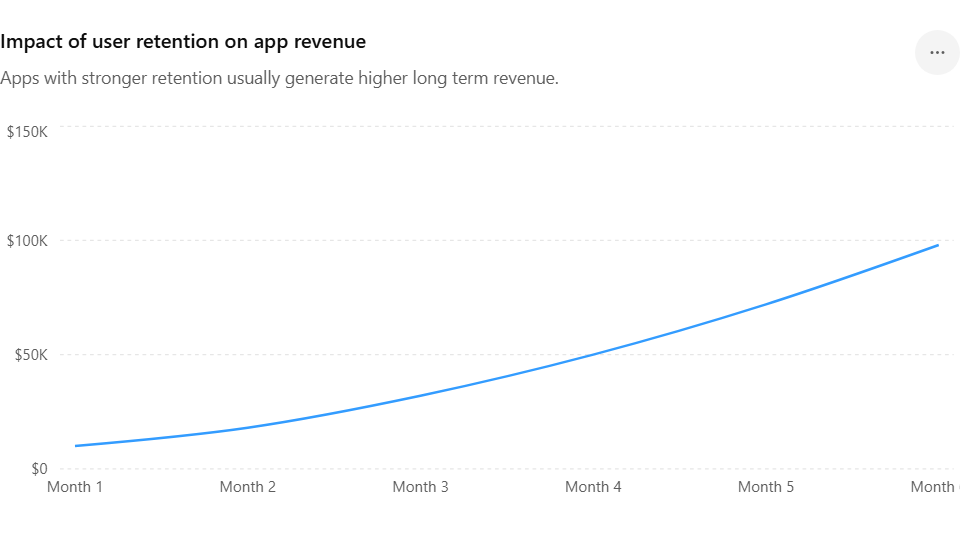
The reality is that profitable apps are built with the right strategy, strong user experience, proper monetization planning, and long term scalability. Apps that solve real problems and keep users engaged are more likely to generate sustainable revenue over time. Businesses that focus only on downloads often struggle because app profitability depends more on retention and recurring usage than initial installs.

In this guide, we will explore the key factors that make a mobile app profitable, the most effective monetization models, common reasons why apps fail, and how businesses can create scalable digital products that generate long term revenue.

Why Are Mobile Apps So Profitable?

Mobile apps are highly profitable because smartphones have become an essential part of daily life. Users rely on apps for shopping, banking, entertainment, healthcare, communication, transportation, and education. Businesses use mobile applications to connect directly with customers, improve engagement, and create recurring revenue opportunities.

One of the biggest advantages of mobile apps is accessibility. Unlike traditional websites, apps provide faster performance, personalized experiences, push notifications, and smoother interactions. This increases user engagement significantly. Businesses that successfully retain active users often generate higher revenue through subscriptions, purchases, advertising, and premium services.

Many of the best apps to make money are successful because they solve specific customer problems in a simple and convenient way. Apps that improve productivity, save time, or offer personalized experiences generally perform better in competitive markets.

Companies like streaming platforms, payment apps, and fitness applications have proven that mobile apps can become long term revenue generating ecosystems when combined with the right business strategy.

Another reason why mobile apps are profitable is scalability. Once the application is built and gains traction, businesses can expand globally without increasing operational costs proportionally. This scalability makes mobile apps one of the most attractive digital business models today.

What Actually Makes a Mobile App Profitable?

Several factors determine whether an app becomes profitable or struggles after launch. Successful apps focus on user needs, retention, scalability, and monetization instead of relying only on downloads.

One of the biggest factors behind app profitability is solving a real problem. Users are more likely to engage with apps that make their lives easier, faster, or more convenient. Apps that address everyday challenges often experience stronger retention and organic growth.

User experience also plays a major role in profitability. A visually attractive app alone is not enough if navigation feels confusing or performance is slow. Profitable apps usually provide smooth onboarding, clean UI/UX design, fast loading speed, and simple navigation. Users quickly uninstall apps that crash frequently or feel difficult to use.

Monetization strategy is another critical factor. Businesses exploring how to make money from an app must choose revenue models carefully based on their audience and app category.

Profitability FactorBusiness Impact
Strong User ExperienceHigher retention
Fast PerformanceBetter engagement
Push NotificationsIncreased app usage
Subscription PlansRecurring revenue
Personalized FeaturesImproved conversions
ScalabilityLong term growth

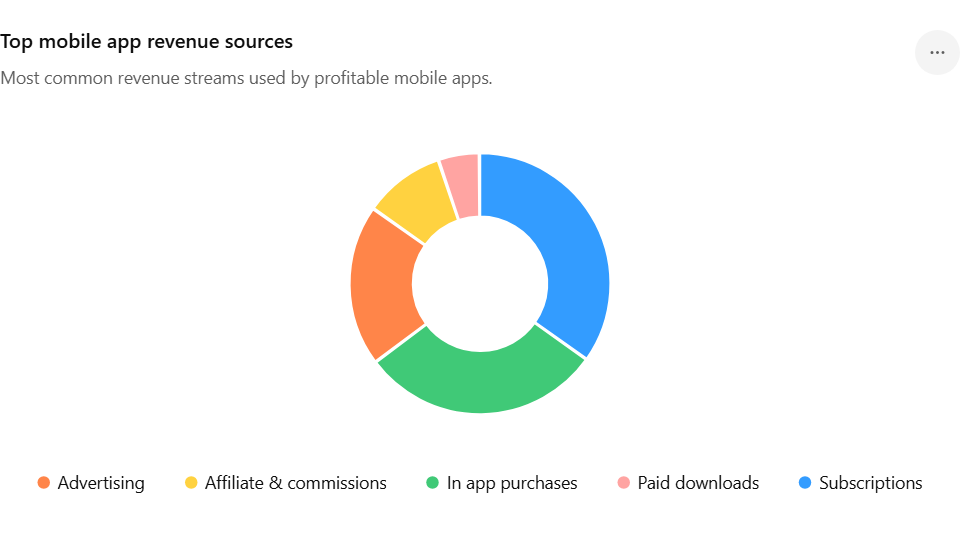
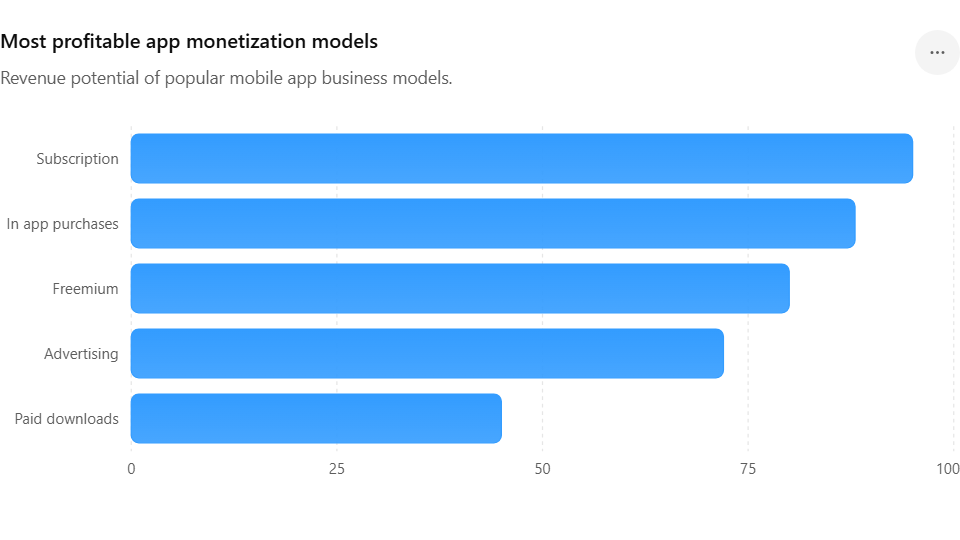
Subscription plans, in app purchases, advertising, affiliate marketing, and freemium services are some of the most popular monetization approaches. Long term user retention is equally important. Many apps receive downloads initially but fail because users stop engaging after a few days. Features like push notifications, personalized recommendations, loyalty rewards, gamification, and regular updates help businesses keep users active for longer periods. The longer users stay engaged, the higher the chances of generating recurring revenue.

Scalable infrastructure is also necessary for profitable mobile apps. As traffic increases, businesses must ensure stable performance, secure transactions, and fast loading times. Apps that fail to scale properly often experience downtime and performance issues, negatively affecting customer trust and revenue growth.

Subscription Based Revenue Model

Subscription based models have become one of the most profitable app monetization strategies in recent years. Streaming platforms, fitness apps, educational apps, and SaaS products commonly use subscriptions to generate recurring monthly or yearly revenue.

This model works especially well for apps that continuously provide value through updated content, personalized experiences, or ongoing services. Instead of relying on one time purchases, subscription models create predictable income and improve customer lifetime value.

Users are often willing to pay recurring fees when they consistently receive useful features, premium content, or exclusive access.

Many successful businesses combine free basic features with premium subscription plans to attract larger audiences while converting engaged users into paying customers.

Subscription models also help businesses forecast revenue more accurately and scale operations more efficiently. However, retaining subscribers requires continuous product improvements, regular updates, and high quality customer experiences.

In App Purchases

In app purchases are widely used in gaming, social media, entertainment, and productivity applications. This monetization model allows users to buy additional features, digital products, virtual currencies, exclusive content, or premium upgrades directly within the app.

Gaming apps are among the biggest examples of successful in app purchase strategies. Many games generate significant revenue through cosmetic upgrades, virtual rewards, premium levels, and digital assets. Social media apps and productivity tools also use this model to unlock advanced features or remove usage limitations.

One of the biggest advantages of in app purchases is flexibility. Users can access the app for free initially and spend money gradually based on their engagement level. This helps businesses attract larger audiences while increasing monetization opportunities from highly active users.

However, businesses must balance monetization carefully. Excessive purchase prompts or aggressive upselling can negatively affect user experience and retention.

Advertising Revenue

Advertising remains one of the most common ways to monetize free mobile applications. Businesses generate revenue by displaying ads within the app through banner ads, video ads, native ads, and rewarded advertisements.

Free apps with large user bases often rely heavily on advertising because it allows businesses to generate revenue without charging users directly. Social media apps, gaming platforms, and content based applications commonly use this monetization model.

Rewarded ads are becoming increasingly popular because they encourage user interaction without disrupting the overall experience. Users voluntarily watch ads in exchange for rewards, extra content, or in app benefits.

While advertising can generate substantial revenue, poor ad placement or excessive ads may reduce engagement and increase uninstall rates.

Advertising TypeBest For
Banner AdsNews & blogging apps
Video AdsGaming applications
Native AdsSocial media platforms
Rewarded AdsMobile games
Interstitial AdsEntertainment apps

Successful apps carefully balance advertising with user experience to maintain retention and profitability. 

Freemium Model

The freemium model allows users to access basic features for free while charging for advanced functionality or premium experiences. Many SaaS applications, productivity tools, and educational platforms use this strategy effectively.

Freemium models work well because they reduce entry barriers for new users. People are more likely to try an app when they can access core features without immediate payment. Once users become engaged, businesses can encourage upgrades through premium features, additional storage, advanced tools, or exclusive content.

This strategy is especially useful for startups exploring how to create an app and make money because it helps build user bases quickly while gradually improving conversions.

However, businesses must carefully balance free and paid features. If the free version provides too little value, users may abandon the app before upgrading. On the other hand, if the free version offers everything, conversion rates may remain low.

Final Thoughts

Building a profitable mobile app requires much more than attractive design and advanced features. Businesses must focus on solving real user problems, improving user experience, choosing the right monetization strategy, and maintaining long term customer engagement.

Entrepreneurs searching for answers to how to make money with an app or how do you make money off apps should understand that profitability depends heavily on user retention, scalability, and continuous product improvement. The most successful apps are usually those that evolve based on customer feedback and changing market demands. The best apps to make money are not always the most complex apps. In many cases, simple apps that provide convenience, consistency, and strong user experiences outperform larger competitors. If you are planning to build a scalable and revenue generating mobile application, partnering with an experienced app development company like Devstree IT Solution can help you develop high performance digital products designed for long term business growth and profitability.