Building a professional website is one of the first and most important steps for any business looking to establish a strong online presence. Today, businesses have more options than ever before. Some choose no-code website builders because they are quick and easy to use, while others invest in custom development to create a unique and scalable digital platform.
Both approaches have their own advantages, but the right choice depends on your business goals, budget, and future growth plans. A website that works well for a small startup may not be suitable for a growing company that requires advanced functionality and integrations.
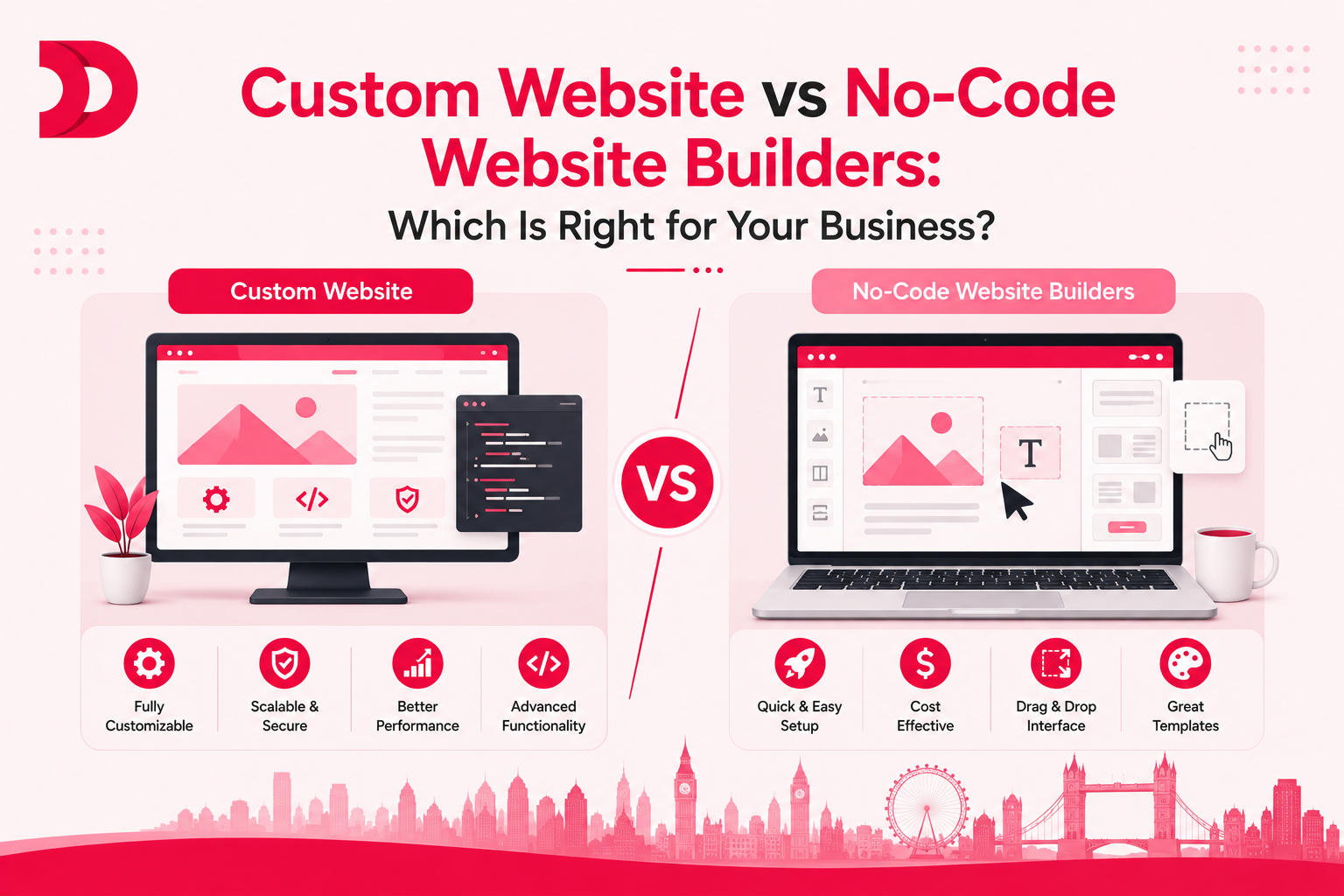
In this guide, we’ll compare custom website vs no-code website builders to help you understand which option is the best fit for your business.
Why Choosing the Right Website Platform Matters ?
Your website is more than just a digital brochure. It represents your brand, builds customer trust, generates leads, and supports your marketing efforts. Choosing the wrong platform can limit your ability to grow, while the right platform becomes a valuable business asset for years to come.
Before making a decision, consider your long-term objectives rather than focusing only on the initial development cost or launch speed.
What Is a No-Code Website Builder?
A no-code platform allows users to create websites using drag-and-drop tools without writing code. These platforms are designed for people with little or no technical experience, making website creation much faster and easier.
A no-code website builder typically includes ready-made templates, built-in hosting, and simple editing tools. This makes it an attractive option for businesses that need a basic website in a short period of time.
What Is a Custom Website?
A custom website is designed and developed specifically for your business. Every layout, feature, and functionality is built according to your unique requirements instead of relying on pre-built templates.
Businesses investing in custom website development gain greater flexibility, stronger branding, and the ability to scale their website as their business grows.
Design Flexibility
One of the biggest differences between these two options is design freedom. No-code platforms provide professionally designed templates, but they often limit how much you can customise individual elements.
Custom websites offer complete creative freedom. Designers and developers can build unique layouts, animations, user journeys, and interactive features that accurately reflect your brand identity.
Development Speed
For businesses that need a website quickly, no-code platforms can significantly reduce development time. Many websites can be launched within days by using existing templates and pre-built components.
Custom websites usually require more planning, design, development, and testing. Although the process takes longer, the final result is tailored specifically to your business rather than built around template limitations.
Cost Comparison
Budget is often one of the first considerations when choosing a website solution. No-code platforms generally require a lower upfront investment because much of the infrastructure is already provided.
Custom development involves higher initial costs due to design, coding, testing, and deployment. However, businesses should also consider future maintenance, scalability, and expansion when comparing long-term value.
Performance and Website Speed
Website speed plays an important role in customer satisfaction and search engine rankings. Visitors expect websites to load quickly on both desktop and mobile devices.
Custom websites are often faster because developers include only the features required for the project. No-code websites may include unnecessary scripts or plugins that can affect loading speed as the website grows.
Search Engine Optimisation
A well-optimised website attracts more visitors through search engines. Both custom websites and no-code platforms can support SEO, but the level of technical control differs.
Custom websites provide complete control over code structure, page performance, schema markup, and technical optimisation. No-code platforms usually include built-in SEO tools, although advanced customisation may be more limited.
Security and Reliability
Website security should always be a priority regardless of business size. Customers expect their personal information to remain safe when interacting with your website.
Most no-code platforms manage hosting, updates, and security automatically. Custom websites require regular maintenance but provide greater control over security configurations, server environments, and access permissions.
Scalability for Future Growth
As businesses grow, their website requirements often become more advanced. New services, customer portals, integrations, and automation features may be required over time.
Businesses comparing custom website vs website builder solutions should think about future expansion rather than only current requirements. Custom websites generally provide greater flexibility for long-term growth.
Content Management
Keeping your website updated is essential for maintaining customer engagement and improving search engine visibility.
No-code platforms are designed for simple content management, allowing business owners to update pages, images, and text without technical knowledge. Custom websites can also include content management systems tailored specifically to your workflow and business processes.
Third-Party Integrations
Modern businesses rely on multiple digital tools including CRM systems, payment gateways, email marketing platforms, booking systems, and analytics software.
Custom websites can integrate almost any third-party service based on business requirements. While no-code platforms support many integrations, businesses may encounter limitations when advanced custom functionality is needed.
User Experience
Customer experience influences how visitors interact with your website and whether they become paying customers.
Custom websites allow businesses to create personalised user journeys, interactive interfaces, and optimised navigation. No-code platforms provide user-friendly templates but may not offer the same level of design flexibility or customer experience optimisation.
Maintenance and Updates
Every website requires ongoing maintenance to ensure security, performance, and compatibility with changing technologies.
No-code platforms automatically manage most software updates and technical maintenance. Custom websites require dedicated maintenance, although this also provides greater control over future enhancements and feature development.
Which Businesses Should Choose No-Code?
No-code solutions are often suitable for businesses with straightforward website requirements and limited budgets.
These platforms work well for:
- Small businesses
- Personal portfolios
- Local service providers
- Event websites
- Landing pages
- Startup businesses validating new ideas
For businesses needing a fast online presence, no-code website development can be an effective starting point.
Which Businesses Should Choose Custom Development?
Custom websites are better suited for organisations planning long-term growth or requiring specialised functionality.
Examples include:
- Enterprise businesses
- Ecommerce platforms
- Healthcare organisations
- Financial services
- SaaS companies
- Marketplace platforms
- Membership websites
Businesses comparing website builder vs custom website solutions often choose custom development when scalability and flexibility are priorities.
Questions to Ask Before Choosing
Before selecting your website approach, ask yourself several important questions.
Consider:
- What are my business goals?
- Will my website grow over time?
- Do I need custom functionality?
- Will I integrate third-party software?
- How important is SEO?
- What is my long-term budget?
Answering these questions helps identify the most suitable solution for your business.
Why Professional Development Still Matters
Regardless of the platform you choose, professional guidance can significantly improve the quality of your website.
Experienced developers understand user experience, performance optimisation, security, accessibility, and search engine optimisation. Businesses investing in custom web development often achieve stronger long-term results because every aspect of the website is designed around their specific objectives.
Read more- 10 Things to Know Before Hiring a Web Development Agency
Choosing the Right Development Partner
Selecting the right technology partner is just as important as selecting the right platform. An experienced team will evaluate your business goals before recommending the most appropriate solution.
A reliable website development company should provide:
- Business consultation
- UI and UX design
- Technical expertise
- SEO friendly development
- Ongoing maintenance
- Future scalability
- Transparent communication
Working with experienced professionals reduces development risks while ensuring your website supports future business growth.
Which Is the Best Website Solution for Your Business?
There is no single answer that suits every organisation. The best choice depends on your business size, budget, technical requirements, and long-term plans.
If you need a simple website with basic functionality and a quick launch, a no-code platform may be the right option. However, businesses looking for complete flexibility, advanced functionality, stronger branding, and long-term scalability often benefit more from custom development.
Choosing the best website solution for business means evaluating not only today’s requirements but also where your company will be in the next few years.
Conclusion
Both custom websites and no-code website builders offer valuable benefits, but they serve different business needs. No-code platforms provide an affordable and fast way to establish an online presence, while custom websites deliver greater flexibility, better performance, stronger branding, and unlimited scalability.
When comparing custom website vs no-code website builders, the most important factor is your long-term business strategy. Businesses planning sustained growth, advanced functionality, and unique customer experiences often achieve better results through custom development. By carefully evaluating your goals, budget, and future expansion plans, you can confidently choose a website solution that supports your business for years to come.