

 James
James
 May 29, 2026
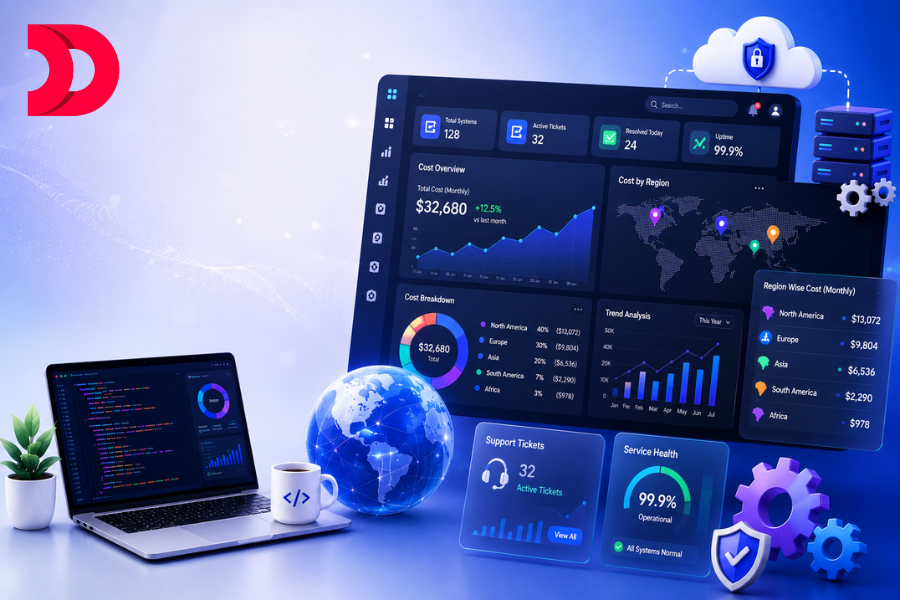
Software development is only the first step in building a successful digital product. Once the application is launched, businesses must continuously invest in support and maintenance to keep the software secure, stable, scalable, and compatible with changing technologies. Many companies underestimate these ongoing costs during the initial planning stage, but in reality, software maintenance becomes one of the most important long term investments for any business application.
Whether it is a mobile app, SaaS platform, enterprise software, healthcare solution, or eCommerce website, every application requires regular monitoring, updates, bug fixing, security improvements, and performance optimization after deployment. Without proper maintenance, software performance can gradually decline, resulting in downtime, security vulnerabilities, poor user experience, and loss of customer trust.
Software maintenance is essential because technology continuously evolves. Operating systems receive updates, security threats become more advanced, user expectations change, and businesses constantly introduce new features to stay competitive in the market. Without regular maintenance, applications may face compatibility issues, slow loading speed, frequent crashes, server downtime, and cybersecurity risks. Many businesses initially assume software development ends after deployment, but in reality, post launch maintenance becomes one of the most critical factors for long term business success. Modern businesses also rely heavily on software availability. Even a few minutes of downtime can negatively impact revenue, operational efficiency, and customer trust.
Software support and maintenance services include multiple technical and operational activities that help applications run smoothly after launch. These services usually include bug fixing, security patches, server monitoring, cloud management, API updates, database optimization, backup management, UI/UX improvements, performance tuning, and feature enhancements. For enterprise applications and SaaS platforms, maintenance may also involve scalability planning, infrastructure upgrades, DevOps management, and continuous deployment support to handle increasing traffic and business growth effectively.
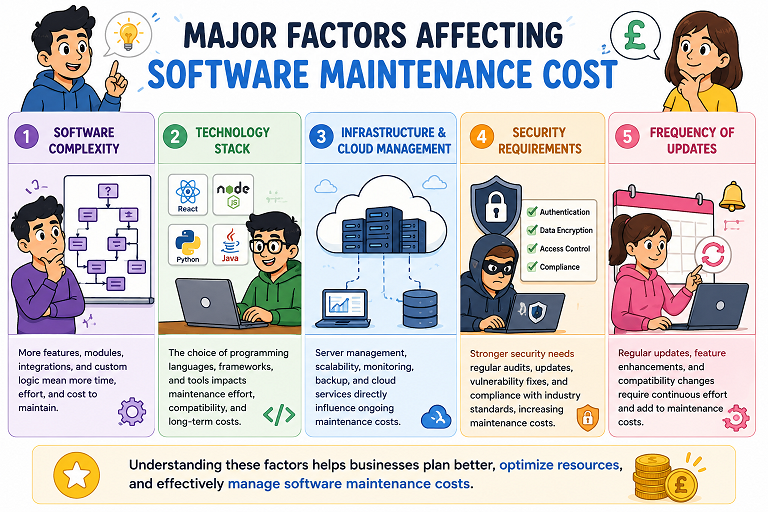
Several factors influence the total cost of software support and maintenance services. Understanding these factors helps businesses plan their long term operational budgets more effectively.
The complexity of the software directly impacts maintenance costs. A simple business website or basic mobile application requires significantly less maintenance compared to fintech platforms, healthcare systems, enterprise ERP solutions, or AI powered SaaS products. Applications with real time processing, payment systems, large databases, third party integrations, and advanced analytics require experienced technical teams and continuous monitoring, which increases operational expenses considerably. Complex software systems also demand extensive testing whenever updates or feature enhancements are implemented.
The technology stack used during development also affects long term support costs. Modern frameworks and scalable architectures are generally easier and more affordable to maintain compared to outdated legacy systems. Technologies like React, Node.js, Laravel, and Flutter are widely preferred because they support scalability, easier maintenance, and modern development practices. Legacy systems often require additional modernization efforts and specialized developers, which increases long term maintenance expenses.
Cloud infrastructure management is another major contributor to software maintenance costs. Businesses using cloud platforms like Amazon Web Services, Google Cloud, and Microsoft Azure must continuously manage server uptime, traffic balancing, storage scaling, backups, and security monitoring. As the application grows and attracts more users, cloud hosting and infrastructure optimization costs also increase significantly.
Cybersecurity has become one of the biggest concerns for modern businesses. Applications handling financial transactions, healthcare records, payment data, or sensitive user information require regular security audits and updates. Security maintenance generally includes vulnerability testing, firewall management, malware protection, encryption upgrades, compliance monitoring, and access control management. Fintech and healthcare applications usually require higher maintenance budgets because they must comply with strict security standards and industry regulations.
Some businesses release updates occasionally, while SaaS platforms and fast growing startups may deploy updates weekly or even daily. Frequent updates require continuous testing, deployment management, QA validation, and performance monitoring.
Businesses that actively improve their products based on user feedback generally invest more in long term software maintenance and support services.
The geographical location of the development and support team significantly affects software maintenance pricing. Labor costs, technical expertise, operational expenses, and market demand vary across different regions.
North America has some of the highest software support and maintenance costs globally because of high labor and operational expenses. Businesses in the United States and Canada often prefer local teams for enterprise applications, compliance sensitive projects, and advanced infrastructure management.
Average Hourly Rate:
$100 – $250/hour
While North American companies provide highly experienced support services, long term maintenance expenses can become extremely high for startups and mid sized businesses.
Western Europe also offers highly experienced software engineers and enterprise support services. Countries like Germany, France, and the United Kingdom have strong software development ecosystems focused heavily on security, compliance, and software quality.
Average Hourly Rate:
$80 – $180/hour
European companies generally prioritize enterprise grade support, regulatory compliance, and long term software stability.
Eastern Europe has become one of the most popular outsourcing destinations for software maintenance services because it offers skilled developers at comparatively lower costs.
Countries like Poland, Romania, and Ukraine are widely recognized for software outsourcing and technical support services.
Average Hourly Rate:
$40 – $100/hour
Many businesses choose Eastern European teams because they offer a strong balance between affordability and technical expertise.
India and other Asian countries are among the most cost effective regions for software support and maintenance services. Businesses worldwide prefer outsourcing maintenance services to India because of lower operational costs, experienced developers, flexible engagement models, and 24/7 technical support availability.
Average Hourly Rate:
$20 – $60/hour
Many startups and enterprises significantly reduce long term operational expenses by partnering with offshore software maintenance companies in Asia.
Software maintenance costs also vary depending on the scale of the application and business operations.
Small business websites and basic mobile applications may require monthly maintenance budgets ranging from $500 to $3,000. Mid sized SaaS platforms with growing traffic, integrations, and regular feature updates may require between $3,000 and $15,000 per month.
Enterprise software systems with advanced infrastructure, AI systems, global user bases, and complex security requirements may require monthly maintenance budgets exceeding $20,000 to $100,000 or more.
Large scale enterprise applications often require dedicated DevOps engineers, cloud architects, cybersecurity experts, and 24/7 monitoring teams.
Many businesses underestimate the complexity of long term software maintenance. In reality, maintaining software can become even more challenging than the initial development process. Some common maintenance challenges include legacy system management, technical debt, scalability issues, server downtime, third party API changes, security vulnerabilities, and performance bottlenecks. Businesses that ignore regular maintenance often face higher operational costs later because emergency fixes and downtime management become significantly more expensive.
Businesses can reduce long term maintenance expenses by planning software architecture properly from the beginning. Using modern frameworks, scalable infrastructure, automated testing systems, and cloud optimization strategies helps reduce operational complexity. Regular security audits, performance monitoring, and proactive updates also help businesses avoid expensive technical failures and downtime issues later. Investing in scalable development practices during the initial development stage often reduces future maintenance costs significantly.
Many companies prefer outsourcing software support and maintenance instead of maintaining large in house technical teams. Outsourcing helps businesses reduce operational costs, access experienced developers, scale support teams quickly, and ensure continuous monitoring without increasing internal overhead expenses.
This is one of the main reasons why offshore software support and maintenance companies continue growing rapidly worldwide.
Software support and maintenance are essential for keeping digital products secure, scalable, and competitive in the long run. Businesses that invest in proper maintenance can improve application stability, reduce downtime, enhance security, and deliver better customer experiences.
The total maintenance cost depends on multiple factors including software complexity, technology stack, infrastructure requirements, security standards, update frequency, and geographical location of the support team. While North America and Western Europe offer premium enterprise support services, many businesses choose offshore software maintenance companies in India and Asia to optimize long term operational costs without compromising software quality.
If you are looking for reliable software support and maintenance services, partnering with an experienced technology company like Devstree IT Solution can help you reduce operational risks, improve software performance, and maintain scalable digital solutions for long term business growth.
 James
March 20, 2026
James
March 20, 2026
Businesses today operate in a world where every action generates…
Read more
 James
August 28, 2025
James
August 28, 2025
Having your Google Play Developer account suspended can be a…
Read more
 James
June 11, 2025
James
June 11, 2025
In the fast-paced digital world of 2025, where users access…
Read more
 James
May 22, 2025
James
May 22, 2025
In the fast-paced world of software development, a well-crafted roadmap…
Read more