

 James
James
 July 8, 2026
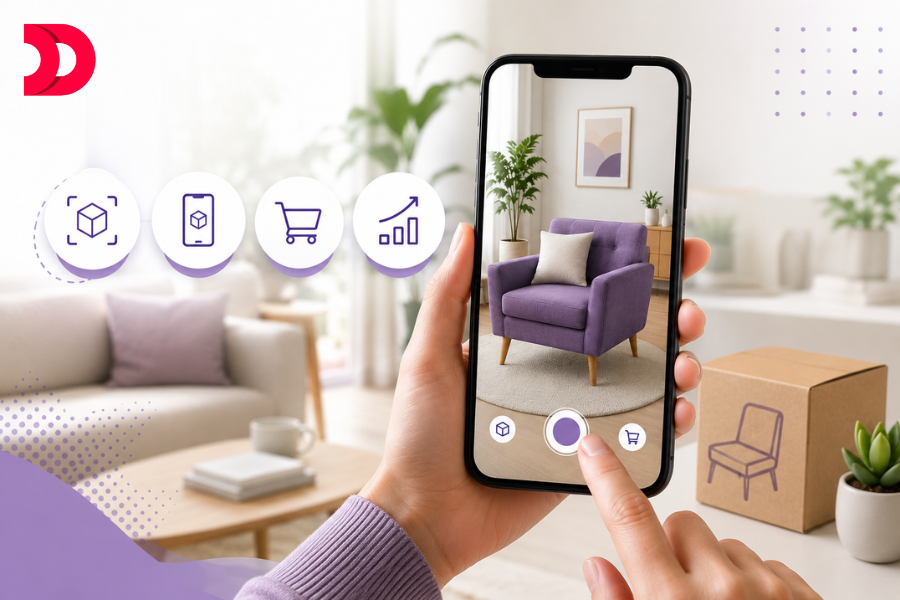
The eCommerce industry has evolved far beyond traditional online shopping. Modern customers expect interactive, engaging, and personalized experiences before making a purchase. As online competition continues to increase, retailers are investing in technologies that improve customer confidence and reduce uncertainty during the buying process. One of the most impactful innovations driving this transformation is Augmented Reality (AR).
Retail AR applications allow customers to visualize products in their real-world environment before purchasing, making online shopping more immersive and convenient. Whether it’s trying on glasses, placing furniture in a living room, or seeing how paint colors look on a wall, AR helps customers make informed decisions. Partnering with an experienced AR application development company enables businesses to create innovative shopping experiences that increase customer satisfaction and boost online sales.
In this guide, we’ll explore everything you need to know about retail AR app development, including its benefits, features, development process, technologies, and why it has become an essential investment for modern eCommerce businesses.
Retail AR app development involves creating mobile applications that use Augmented Reality technology to overlay digital products onto the real world through a smartphone or tablet camera. Customers can interact with virtual products as if they were physically present, making it easier to evaluate size, appearance, color, and placement before purchasing.
Businesses increasingly choose Augmented reality (AR) mobile app development to provide engaging customer experiences while reducing return rates and increasing buyer confidence.
Online shoppers often hesitate because they cannot physically examine products before buying. AR bridges this gap by helping customers visualize products in real environments, creating a shopping experience that closely resembles visiting a physical store.
Retailers adopting AR technology gain a competitive advantage by offering a more interactive and personalized shopping journey. Working with a trusted Ecommerce App Development Company allows businesses to integrate AR capabilities with secure ecommerce features, creating a seamless buying experience.
Key business benefits include:
AR technology is no longer limited to furniture or fashion retailers. Businesses across multiple industries are using AR to improve customer experiences and increase online sales.
Popular industries include:
Furniture
Customers can place virtual furniture inside their homes before purchasing.
Fashion
Virtual try-on experiences allow shoppers to preview clothing, shoes, and accessories.
Beauty
Customers can test makeup products using facial recognition and AR filters.
Home Decor
Wall art, lighting, and decorative products can be visualized in real living spaces.
Eyewear
Users can virtually try on glasses and sunglasses before placing an order.
Consumer Electronics
Customers can preview product sizes and compare devices in their surroundings.
Read More- Augmented Reality and Virtual Reality – The Future of Immersive Technology
A successful AR retail app combines immersive visualization with powerful ecommerce functionality. The goal is to simplify purchasing while making shopping more interactive.
Important customer features include:
These features encourage users to complete purchases while improving their overall shopping experience.
Modern AR applications include intelligent features that make virtual shopping feel more realistic and engaging.
Popular AR capabilities include:
Product Placement
Customers can place products inside their room using their smartphone camera.
True Scale Visualization
Products appear in realistic dimensions, helping customers understand size and fit.
Multiple Viewing Angles
Users can inspect products from every angle before making a purchase.
Color and Material Customization
Customers can switch between different colors, finishes, or materials in real time.
Interactive Product Demonstrations
Products can display animations, assembly instructions, or usage demonstrations through AR.
These features help customers feel more confident about their buying decisions.
Retail businesses investing in AR technology gain both customer experience and operational advantages. Interactive shopping experiences often result in better business performance compared to traditional ecommerce platforms.
Major benefits include:
An experienced Mobile App Development Company can help businesses maximize these benefits by building scalable AR applications.
Building an AR powered ecommerce application requires careful planning and technical expertise. Following a structured development process helps reduce risks while ensuring a high-quality product.
Step 1: Business Analysis
Understand your target audience, product catalog, customer expectations, and long-term business goals before development begins.
A clear strategy helps prioritize features and improve return on investment.
Step 2: Define App Features
Create a detailed list of required functionalities based on customer needs and business objectives.
Typical modules include:
A professional Ecommerce App Development Company can help determine which features should be included in the initial release.
Step 3: UI and UX Design
A clean, intuitive interface ensures customers can browse products, activate AR mode, and complete purchases without confusion.
Good design improves customer satisfaction while reducing abandoned shopping carts.
Step 4: Application Development
Developers build the frontend, backend, APIs, ecommerce functionality, AR capabilities, and cloud infrastructure required for the application.
Many businesses choose custom mobile application development to create unique shopping experiences that reflect their brand identity.
Step 5: Testing
Comprehensive testing ensures the application performs reliably across multiple devices and operating systems.
Testing includes:
Quality assurance minimizes bugs before launch.
Step 6: Launch and Maintenance
After launch, businesses should continuously improve the application by monitoring customer feedback, adding new features, and optimizing performance.
Regular updates help maintain customer engagement and long term competitiveness.
Modern retail AR apps rely on powerful technologies that deliver smooth performance and realistic product visualization.
Popular technologies include:
Mobile Development
AR Frameworks
Backend Development
Cloud Platforms
Choosing the right technology stack depends on your business requirements, expected traffic, and future scalability goals.
Every retail business has unique products, customers, and operational workflows. Generic applications often fail to deliver the flexibility needed for long term growth.
Custom mobile application development allows businesses to build solutions tailored specifically to their needs.
Advantages include:
Custom solutions provide greater control over application functionality and future enhancements.
Many retailers are combining Artificial Intelligence with AR to deliver even more personalized shopping experiences.
AI powered features include:
Combining AI with Augmented reality (AR) mobile app development creates highly engaging applications that improve customer satisfaction and increase sales.
Selecting the right technology partner plays a major role in the success of your AR retail application. Businesses should evaluate technical expertise, industry experience, and long term support capabilities.
When choosing an AR application development company, consider:
A reliable Mobile App Development Company will also provide ongoing maintenance, performance optimization, and future feature enhancements.
Retail technology continues to evolve rapidly, creating new opportunities for immersive shopping experiences.
Emerging trends include:
Businesses adopting these innovations early will be better positioned to attract and retain digital customers.
Retail AR applications are redefining the future of ecommerce by making online shopping more interactive, engaging, and customer friendly. From virtual product visualization and personalized experiences to improved purchasing confidence and reduced return rates, AR technology offers significant advantages for businesses looking to stand out in a competitive market.
Partnering with an experienced AR application development company ensures your application combines immersive AR experiences with powerful ecommerce functionality. Whether you need an Ecommerce App Development Company, a trusted Mobile App Development Company, or experts in Augmented reality (AR) mobile app development, investing in professional custom mobile application development will help your business deliver innovative shopping experiences, strengthen customer relationships, and achieve long term growth in the evolving world of digital commerce.
 James
March 11, 2026
James
March 11, 2026
Virtual Reality (VR) is transforming the way people interact with…
Read more
 James
February 5, 2026
James
February 5, 2026
The furniture shopping experience has changed dramatically over the past…
Read more
 James
November 3, 2025
James
November 3, 2025
AI virtual assistants are revolutionizing how users engage with web…
Read more
 James
March 4, 2025
James
March 4, 2025
Businesses are always looking for new ways to engage customers…
Read more