

 James
James
 May 5, 2026
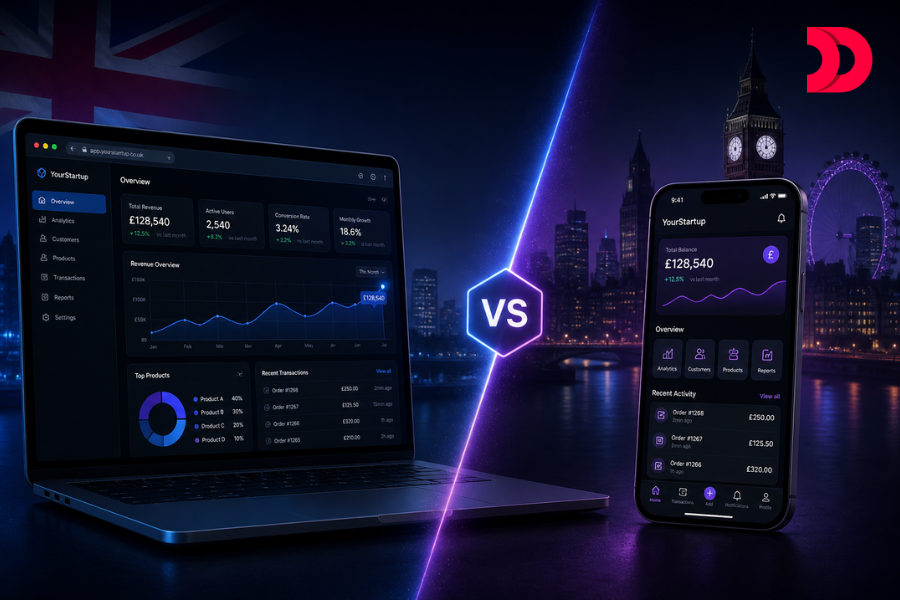
Choosing between a web app and a mobile app is one of the most important decisions for any UK startup. It directly affects your development cost, time to market, user experience, and long-term scalability. Many startups make the mistake of jumping into development without understanding what truly fits their business model. This often leads to wasted resources and slow growth.
The right approach is to align your technology choice with your business goals, target audience, and budget. Whether you plan to work with a mobile app development company or a web app development company, your decision should be strategic, not impulsive.
In this guide, we break everything down step by step so you can make a confident decision and build a product that grows with your startup.
Before choosing the right solution, it’s important to understand how web apps and mobile apps function in real business scenarios. A web app runs through a browser and does not require installation, making it accessible on any device. A mobile app, however, is installed on a smartphone and is designed for platforms like iOS and Android, offering better performance and deeper device integration. For UK startups, this difference impacts how users interact with your product. Web apps focus on accessibility and quick onboarding, while mobile apps focus on engagement and performance. Many startups begin by partnering with a web app development company to build an MVP quickly and test their idea in the market.
If your goal is faster entry and lower investment, choosing to hire a web app developer can help you launch efficiently without overcommitting resources.
Your choice between a web app and a mobile app should always align with your startup’s vision. If you want to validate your idea quickly, a web app is the smarter option. It allows you to launch faster and gather user feedback without high development costs. However, if your goal is to create a highly interactive platform with strong user engagement, working with a mobile app development company becomes essential. Mobile apps are better suited for businesses that rely on daily usage, notifications, and personalized experiences.
UK startups should also analyze their audience behavior. If your users prefer mobile-first experiences, investing in a mobile app developer can help you build a more engaging product. On the other hand, if your users access your platform across multiple devices, a web app provides better flexibility.
Cost is one of the biggest deciding factors for startups. Web apps are generally more affordable because they use a single codebase and do not require platform-specific development. This makes them ideal for startups with limited budgets. Mobile apps, on the other hand, can be more expensive due to the need for separate development for iOS and Android, especially if built natively. Even cross-platform solutions require additional optimization and testing.
For UK startups, a practical approach is to start with a web app and then scale. Many businesses choose to work with a web app development company to build their initial product and later expand by hiring a mobile app developer once they achieve product-market fit.
This phased investment strategy helps reduce financial risk while ensuring long-term growth.
Speed is critical in today’s competitive startup ecosystem. Web apps offer a faster development cycle because they do not require app store approvals. You can launch quickly, gather user feedback, and make updates instantly.
Mobile apps take longer to develop and deploy. After development, they must pass app store review processes, which can delay your launch. Updates also require user downloads, which slows down iteration. For UK startups looking to validate ideas quickly, it’s better to hire a web app developer and launch a web app first. Once the product gains traction, you can then collaborate with a mobile app development company to build a more advanced solution.
This approach ensures faster growth and reduces time-related risks.
User experience plays a major role in product success. Mobile apps are designed for smartphones, offering smoother interactions, faster performance, and features like push notifications and offline access. These capabilities significantly improve user engagement.
Web apps, while improving with modern technologies, still rely on browser performance and internet connectivity. However, they are sufficient for many business models, especially SaaS platforms and B2B solutions. If your product requires frequent user interaction, working with a mobile app development company can help you deliver a superior experience. If your focus is functionality and accessibility, a web app remains a strong option.
Choosing the right experience depends on how users will interact with your platform daily.
Accessibility is where web apps have a clear advantage. Users can access them instantly through a browser without downloading anything. This reduces friction and makes it easier to attract new users. Mobile apps require installation, which adds an extra step in the onboarding process. However, once installed, they often result in higher engagement and retention.
For UK startups aiming for rapid growth, starting with a web app is often the best choice. Later, you can expand your reach by working with a mobile app development company to build a dedicated app.
Balancing accessibility and engagement is key to building a successful digital product.
Maintenance is easier with web apps because updates are applied instantly on the server. Users always access the latest version without needing to install updates. This simplifies ongoing development and reduces maintenance costs. Mobile apps require updates to be pushed through app stores, and users must manually install them. This can slow down feature adoption and increase complexity.
However, mobile apps offer better scalability in terms of performance and advanced features. Many startups begin with a web app and later scale by hiring a mobile app developer to enhance functionality and user experience.
A balanced approach ensures both efficiency and long-term scalability.
A web app is the right choice when your startup is in the early stage and needs to launch quickly. It is ideal for testing ideas, building MVPs, and reaching a wide audience without high investment. Startups often collaborate with a web app development company to create scalable solutions that can evolve over time. This approach allows you to validate your product before committing to more complex development.
If your focus is speed, cost-efficiency, and flexibility, choosing a web app is a smart decision.
A mobile app is the best option when your product requires high engagement, real-time interaction, and access to device features. Industries like fitness, delivery, and social platforms benefit greatly from mobile apps. For UK startups aiming to build strong user relationships, working with a mobile app development company or choosing to hire a mobile app developer ensures better performance and scalability.
Mobile apps are ideal for businesses that prioritize user experience and long-term engagement.
Choosing between a web app and a mobile app is a strategic decision that depends on your startup’s goals, budget, and audience. Web apps offer speed, affordability, and accessibility, making them perfect for early-stage startups. Mobile apps provide better performance and engagement, making them ideal for scaling.
The smartest approach is to start with a web app, validate your idea, and then expand into mobile development. By working with the right web app development company or mobile app development company, you can build a solution that grows with your business.
Making the right choice at the right time is what sets successful startups apart.
 James
August 10, 2026
James
August 10, 2026
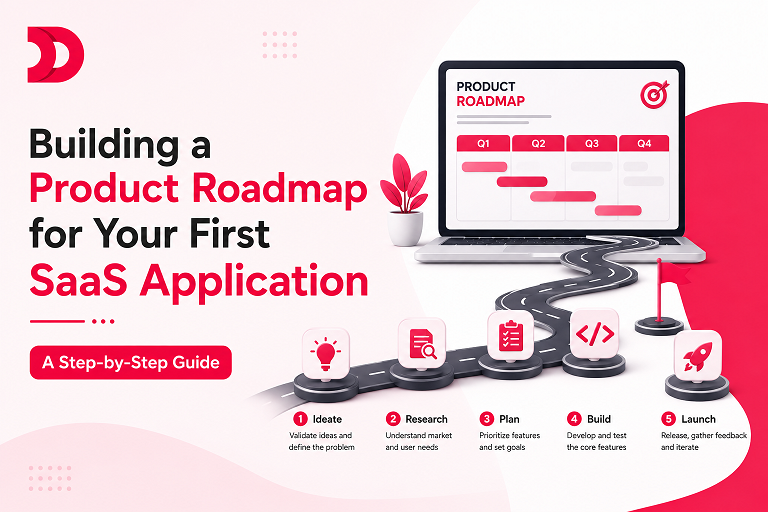
Launching a Software as a Service (SaaS) product is an…
Read more
 James
July 23, 2026
James
July 23, 2026
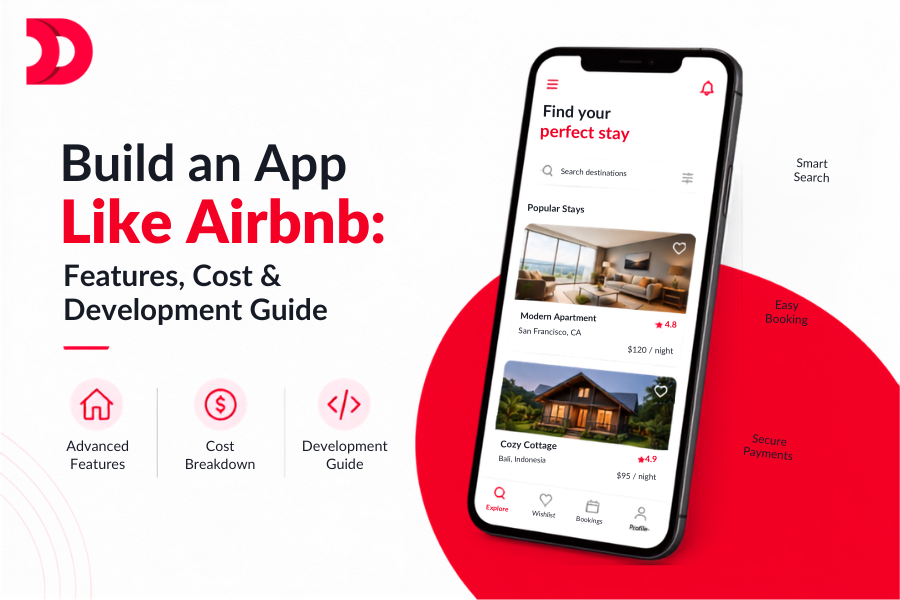
Globally, the travel and property sectors have witnessed massive shifts…
Read more
 James
July 17, 2026
James
July 17, 2026
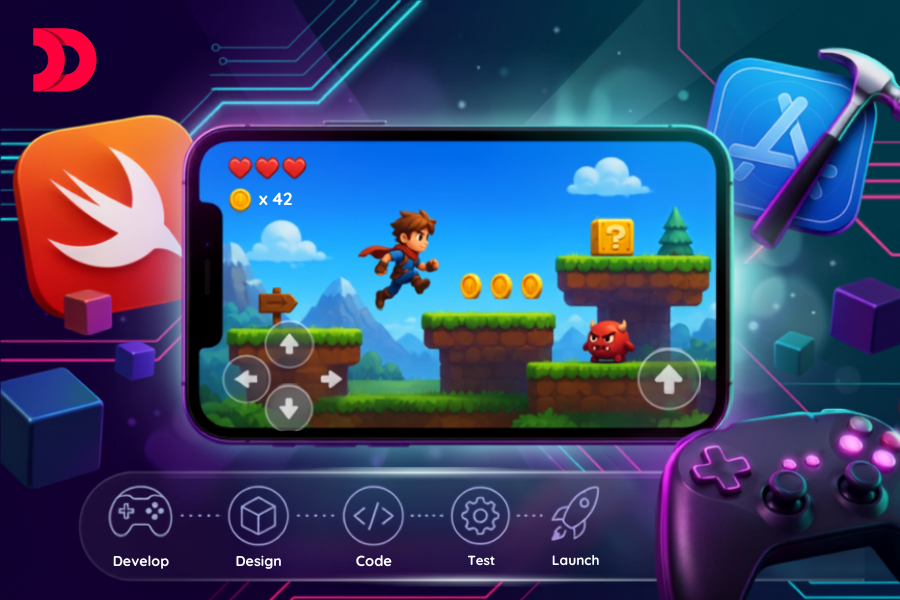
The mobile gaming industry continues to grow at an impressive…
Read more
 James
July 13, 2026
James
July 13, 2026
Food delivery apps have transformed the way people order meals,…
Read more