

 James
James
 May 28, 2025
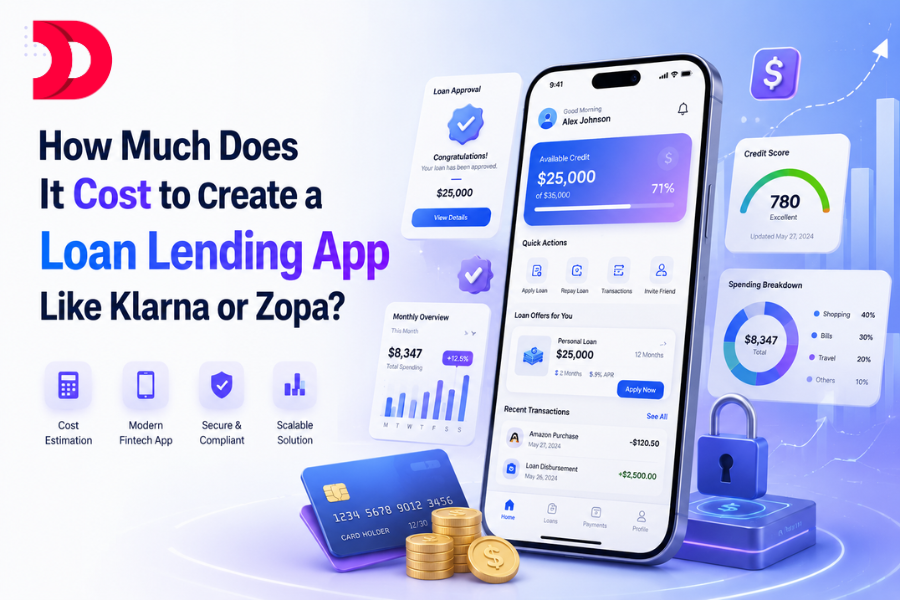
The fintech industry has grown rapidly over the last few years, and digital lending applications are becoming increasingly popular among users worldwide. Traditional banking systems often involve lengthy paperwork, slow approvals, and complicated verification processes. Modern loan lending apps solve these problems by offering instant approvals, digital documentation, flexible repayment options, and seamless mobile experiences. Apps like Klarna and Zopa have transformed how users borrow money, split payments, and manage finances directly from their smartphones.
Because of this growing demand, many startups and enterprises are planning to invest in fintech app development. However, building a loan lending app is much more complex than creating a standard mobile application. Such platforms require strong security systems, regulatory compliance, AI powered credit analysis, payment integrations, fraud detection, and scalable backend infrastructure. All these factors significantly influence the total development cost.
Digital lending platforms are growing rapidly because users expect faster and more convenient financial services directly from their smartphones. Traditional lending systems often involve delays, physical paperwork, and multiple approval stages, which frustrate users. Modern fintech applications simplify the entire borrowing process through automation and digital verification. Another major reason behind this growth is the increasing adoption of Buy Now Pay Later services. Consumers now prefer flexible payment solutions while shopping online, and apps like Klarna have successfully changed consumer payment behavior worldwide. Businesses also see loan lending apps as scalable digital products capable of generating recurring revenue through interest, transaction fees, subscriptions, and financial partnerships.
Several technical and business related factors influence the total development cost of a fintech lending platform. Understanding these factors helps businesses plan their budgets more effectively.
One of the biggest factors affecting development cost is app complexity. A basic MVP loan lending app with features like user registration, loan application forms, EMI calculators, payment integration, and simple dashboards will cost much less compared to a fully featured fintech ecosystem. Advanced functionalities such as AI based credit scoring, fraud prevention systems, blockchain integration, automated underwriting, and multi currency wallets require additional development time and technical expertise, which increases overall costs significantly. Most startups initially launch an MVP version to validate their business model before investing heavily in advanced features.
Security plays a critical role in fintech app development because lending platforms handle highly sensitive user information. Financial applications manage banking data, identity verification documents, payment transactions, and personal records, making them primary targets for cyber threats. Businesses must implement strong security measures such as data encryption, two factor authentication, fraud monitoring systems, secure APIs, and compliance standards like GDPR, PCI DSS, KYC, and AML regulations. Many startups underestimate these compliance related expenses during the planning stage, but in reality, security infrastructure becomes one of the largest investments in fintech application development.
The platform selection also impacts overall development costs. Businesses can either choose native development or cross platform development depending on their budget and long term goals. Native development uses Swift for iOS and Kotlin for Android, offering better performance, security, and smoother financial transaction handling. However, separate development teams are required for both platforms, which increases the total investment significantly. Cross platform frameworks like Flutter and React Native help reduce development time and costs by using a single codebase for Android and iOS applications. Many fintech startups prefer cross platform development during the early stages to launch products faster.
Backend infrastructure is responsible for handling user management, loan processing, transaction records, notifications, analytics, and payment systems. Since lending apps process real time financial transactions, businesses require scalable and highly secure cloud infrastructure. Cloud platforms like Amazon Web Services, Google Cloud, and Microsoft Azure are commonly used for managing fintech operations. As the user base grows, businesses must invest more in cloud hosting, server management, security optimization, and performance monitoring.
Modern lending apps rely heavily on third party integrations for smooth functionality and automation. These integrations include payment gateways, banking APIs, identity verification systems, credit score APIs, SMS notifications, analytics tools, and fraud detection services. Although these integrations improve user experience and operational efficiency, they also increase development complexity and recurring operational costs. In many cases, API providers charge monthly fees based on platform usage.
In fintech applications, user trust is heavily connected to design quality. Users are unlikely to share financial information if the app feels confusing, outdated, or insecure. A successful loan lending app should focus on seamless onboarding, easy navigation, fast loan application flow, secure payment interfaces, and intuitive dashboards. Apps like Klarna invest heavily in user experience because customer trust directly affects user retention and platform growth.
Artificial intelligence is becoming increasingly important in modern fintech applications. Many lending platforms use AI for fraud detection, automated approvals, credit score prediction, user behavior analysis, and customer support chatbots. AI implementation improves automation and reduces manual operational work. However, advanced AI systems require additional infrastructure, machine learning models, and continuous optimization, which increases overall development costs significantly.
Launching the app is only the beginning. Fintech applications require continuous maintenance to ensure security, stability, and regulatory compliance. Ongoing maintenance includes server monitoring, bug fixing, API upgrades, security patches, compliance updates, and performance optimization. Since financial platforms cannot afford downtime, businesses must continuously invest in maintenance and technical support.
A successful loan lending app should provide a smooth, secure, and user friendly experience. Some essential features include user registration, KYC verification, loan applications, EMI calculators, payment gateway integration, transaction history, notifications, customer support, and admin dashboards. Advanced fintech platforms may also include AI recommendations, automated underwriting systems, digital wallets, Buy Now Pay Later functionality, and multi language support to improve user engagement and scalability.
Developing a fintech platform comes with several technical and business challenges. One of the biggest challenges is maintaining strong security while ensuring smooth user experiences. Financial applications must handle sensitive transactions without compromising speed or performance. Other major challenges include regulatory compliance, fraud prevention, backend scalability, real time payment handling, risk assessment, and customer data protection. Many startups focus heavily on frontend design while underestimating backend risk management systems, which later creates operational issues.
The total cost depends on the complexity of the app, feature requirements, security infrastructure, integrations, and scalability goals. A basic MVP lending app may cost around $20,000 to $50,000. Mid level fintech platforms with advanced features and integrations may range between $60,000 and $150,000. Enterprise level lending ecosystems with AI automation, fraud prevention systems, and large scale cloud infrastructure can exceed $300,000 to $500,000 or more. Businesses often prefer offshore fintech app development companies to optimize development costs while still accessing experienced developers and modern technologies.
Loan lending apps generate revenue through multiple monetization models. Common revenue streams include interest charges, loan processing fees, subscriptions, merchant partnerships, late payment charges, and Buy Now Pay Later commissions. Platforms like Klarna have successfully combined fintech services with eCommerce partnerships to create scalable and recurring revenue ecosystems.
Building a loan lending app like Klarna or Zopa requires much more than standard app development. Businesses need strong security infrastructure, scalable backend systems, regulatory compliance, advanced financial integrations, and long term operational planning to succeed in the competitive fintech industry. Most successful fintech startups begin with an MVP version, validate user demand, and gradually scale their platform with advanced features based on market trends and customer behavior.
If you are planning to build a secure and scalable loan lending platform, partnering with an experienced fintech app development company like Devstree IT Solution can help accelerate development while ensuring security, compliance, scalability, and long term business growth.
 James
August 10, 2026
James
August 10, 2026
Launching a Software as a Service (SaaS) product is an…
Read more
 James
July 23, 2026
James
July 23, 2026
Globally, the travel and property sectors have witnessed massive shifts…
Read more
 James
July 17, 2026
James
July 17, 2026
The mobile gaming industry continues to grow at an impressive…
Read more
 James
July 13, 2026
James
July 13, 2026
Food delivery apps have transformed the way people order meals,…
Read more