

 James
James
 August 10, 2026
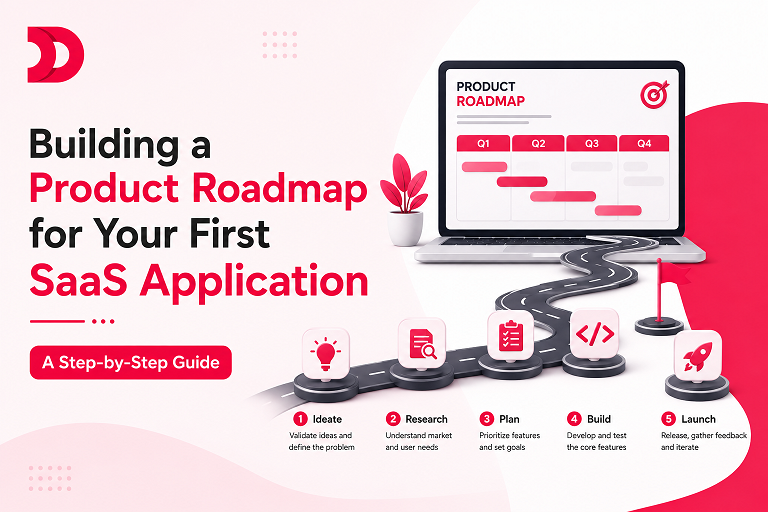
Launching a Software as a Service (SaaS) product is an exciting journey, but turning an idea into a successful application requires careful planning. Many startups begin development without a clear roadmap, only to face delays, budget overruns, or features that customers never use. A well-defined product roadmap helps you avoid these challenges by providing a clear direction from the initial idea to product launch and beyond.
Whether you are creating a project management platform, CRM system, healthcare application, or AI-powered solution, a roadmap ensures every decision supports your business objectives. Partnering with an experienced SaaS development company can also help transform your vision into a scalable and market-ready product.
This guide explains how to build an effective product roadmap for your first SaaS application and highlights the key stages every founder should follow.
A product roadmap is a strategic plan that outlines your product’s vision, goals, features, and development timeline. It acts as a blueprint that keeps founders, developers, designers, and stakeholders aligned throughout the project.
Instead of focusing only on development tasks, a roadmap connects business objectives with customer needs. It also helps prioritise features, manage budgets, and reduce unnecessary development work.
Many first-time founders are eager to start coding immediately, but successful SaaS businesses begin with proper planning. A roadmap provides clarity and helps teams stay focused on solving real customer problems rather than adding unnecessary features.
An organised roadmap also improves communication between stakeholders, simplifies decision-making, and ensures every development phase contributes to the long-term product vision.
Step 1: Define Your Product Vision
Every successful SaaS application starts with a clear purpose. Before discussing features or technology, identify the problem your product will solve and the audience it will serve.
Consider questions such as:
A clear vision becomes the foundation for every future product decision.
Step 2: Research Your Target Market
Understanding your market is essential before investing in development. Research helps validate your idea and ensures there is genuine demand for your solution.
Market research should include competitor analysis, customer interviews, industry trends, pricing models, and user expectations. Businesses often combine this stage with product strategy consulting to better understand market opportunities before development begins.
Step 3: Identify Your Core Features
One of the biggest mistakes startups make is trying to build every feature at once. Instead, focus on solving one major customer problem exceptionally well.
Separate your features into three categories:
Prioritising features keeps development manageable while reducing costs during the first release.
Step 4: Build a Minimum Viable Product (MVP)
An MVP allows you to launch quickly with only the most valuable features. Rather than waiting months to build a complete platform, an MVP enables businesses to validate ideas using real customer feedback.
Working with an experienced MVP development company helps startups release faster while reducing development risks. Customer feedback gathered after launch can then guide future improvements.
Step 5: Choose the Right Development Team
The success of your SaaS application depends heavily on the people building it. Selecting experienced professionals ensures your product is developed using scalable architecture, secure coding practices, and modern technologies.
Businesses planning long-term products often hire SaaS developers with expertise in cloud platforms, APIs, security, frontend development, backend systems, and DevOps.
Step 6: Select the Right Technology Stack
Technology choices affect application performance, scalability, security, and maintenance costs.
Common technologies include:
Frontend:
Backend:
Database:
Cloud:
An experienced SaaS application development company can recommend the most suitable technology stack based on your business goals and expected growth.
Step 7: Plan Your Development Timeline
A realistic development timeline helps manage expectations while reducing project risks.
Typical roadmap phases include:
Breaking the project into milestones makes progress easier to measure.
Step 8: Focus on User Experience
A successful SaaS product should be simple, intuitive, and enjoyable to use. Complicated interfaces often lead to poor customer retention regardless of how powerful the software may be.
Good user experience includes:
Businesses investing in custom SaaS development services often prioritise user experience because it directly impacts customer satisfaction and retention.
Step 9: Plan for Scalability
Your first customers may number only a few hundred, but your platform should be capable of supporting thousands or even millions as your business grows.
Planning scalability early prevents expensive redevelopment later.
Important considerations include:
This is where cloud application development services become essential for supporting future expansion.
Step 10: Prepare Your Go to Market Strategy
Building a great product is only part of the journey. You also need a strategy for attracting your first customers.
Your launch plan may include:
Marketing activities should begin well before product launch to build awareness.
Step 11: Gather Customer Feedback
Your roadmap should continue evolving after launch. Customer feedback provides valuable insights into which features create value and which areas require improvement.
Useful feedback sources include:
Listening to customers helps ensure future updates remain aligned with user needs.
Step 12: Continuously Improve the Product
Successful SaaS businesses treat development as an ongoing process rather than a one-time project.
Regular improvements may include:
Continuous innovation keeps your application competitive in a rapidly changing market.
Many SaaS startups encounter similar challenges during development. Avoiding these common mistakes increases the likelihood of long-term success.
Common mistakes include:
Proper planning significantly reduces these risks.
Many founders lack the resources to build an internal engineering department during the early stages of their business.
A dedicated SaaS development team provides experienced professionals who work exclusively on your project while offering flexibility as your product grows. This model often reduces recruitment costs and accelerates development without sacrificing quality.
As your customer base expands, your roadmap should evolve beyond startup requirements. Larger organisations often require advanced integrations, higher security standards, compliance features, and complex user management.
Planning for enterprise SaaS development early helps ensure your application can support larger clients without major architectural changes.
Why Expert Guidance Matters
Building a SaaS application involves much more than writing code. Product planning, architecture, user experience, cloud infrastructure, cybersecurity, and long-term maintenance all require specialised expertise.
Businesses often combine development with SaaS consulting services to validate ideas, improve product strategies, reduce technical risks, and create realistic growth plans before significant investments are made.
Selecting the right technology partner is one of the most important decisions for any SaaS startup.
Look for a company that offers:
Many founders also prefer providers offering complete software product development services, allowing strategy, design, development, testing, and maintenance to be managed under one team.
Building your first SaaS application requires much more than a great idea. A carefully planned product roadmap provides the structure needed to validate your concept, prioritise features, manage development, and prepare for future growth.
Whether you’re working with a startup app development company, exploring custom SaaS development services, or planning to hire SaaS developers, having a clear roadmap significantly improves your chances of success. By combining strategic planning, customer feedback, scalable architecture, and expert guidance from a trusted SaaS application development company, your business can build a reliable product that continues evolving with customer needs while laying the foundation for sustainable long-term growth.
 James
July 23, 2026
James
July 23, 2026
Globally, the travel and property sectors have witnessed massive shifts…
Read more
 James
July 17, 2026
James
July 17, 2026
The mobile gaming industry continues to grow at an impressive…
Read more
 James
July 13, 2026
James
July 13, 2026
Food delivery apps have transformed the way people order meals,…
Read more
 James
July 7, 2026
James
July 7, 2026
Mobile applications are evolving faster than ever, and one of…
Read more