

 James
James
 May 14, 2026
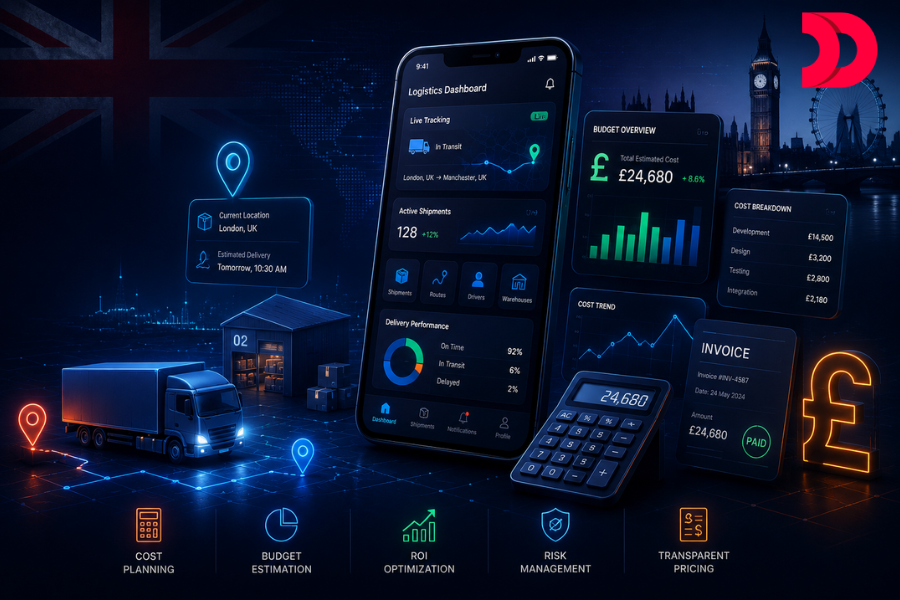
The logistics industry in the UK is rapidly embracing digital transformation. From real-time shipment tracking to automated fleet management, businesses are investing heavily in logistics applications to improve operational efficiency and customer experience. However, one of the most common questions businesses ask before starting a project is: how much does logistics app development actually cost?
The answer depends on several factors, including app complexity, features, development approach, and the expertise of the team you hire. Whether you’re working with a Logistics App Development company or planning to hire a dedicated logistic app developer, understanding the cost structure is essential for making informed business decisions.
In this guide, we break down the major factors that influence logistics app development costs in the UK and help you understand how to budget effectively for your project.
Why Logistics Apps Are Becoming Essential for UK Businesses
The logistics industry is becoming increasingly technology-driven. Customers now expect real-time updates, faster deliveries, transparent communication, and seamless digital experiences. Traditional systems are no longer enough to meet these growing expectations.
This shift has pushed many businesses to invest in custom logistics applications that simplify operations and improve efficiency. Modern logistics apps help companies manage fleets, optimize routes, track deliveries, automate workflows, and improve customer satisfaction.
As competition continues to increase, businesses that fail to adopt digital solutions risk falling behind. This is why many companies are now partnering with a professional mobile app development company to build scalable and future-ready logistics platforms.
The overall Logistic app development cost depends on multiple technical and business-related factors. No two logistics applications are exactly the same, which means development budgets can vary significantly based on project requirements.
One of the biggest cost factors is app complexity. A basic app with simple tracking and booking functionality will cost much less than a feature-rich enterprise solution with AI-based route optimization, analytics dashboards, and real-time fleet management.
The number of platforms also impacts pricing. Developing separate apps for Android and iOS usually increases costs, while cross-platform development can reduce expenses.
Other factors include:
Working with an experienced Logistics App Development company helps businesses understand these factors and create a realistic development budget.
Logistics app pricing in the UK usually falls into different categories depending on the level of functionality.
Basic Logistics App
A basic logistics app may include:
These applications are suitable for startups or small businesses looking to digitize operations quickly. Development costs for basic apps are generally lower because they require fewer integrations and simpler architecture.
Mid-Level Logistics App
Mid-level apps include more advanced functionality such as:
These apps require more development time and backend infrastructure, increasing overall costs.
Advanced Enterprise Logistics Platform
Enterprise-grade logistics solutions often include:
These large-scale applications involve extensive development and long-term planning, making them the most expensive category.
The final Logistic app development cost depends entirely on the features and scalability your business requires.
Many businesses underestimate the importance of UI/UX design when budgeting for app development. However, design plays a critical role in user experience and operational efficiency.
A well-designed logistics application improves navigation, reduces user errors, and enhances productivity for both customers and internal teams. Clean interfaces and intuitive workflows are especially important in logistics platforms where users need quick access to information.
Professional design also impacts customer trust and engagement. Businesses often work with a trusted mobile app development company to ensure the app delivers both functionality and a smooth user experience.
While advanced design increases initial costs, it often improves long-term usability and customer satisfaction.
The backend is the core engine of any logistics application. It manages data, user authentication, real-time tracking, notifications, analytics, and system integrations.
A strong backend infrastructure is essential for handling large amounts of real-time logistics data efficiently. Applications with advanced features such as live vehicle tracking, dynamic route calculations, and automated reporting require more complex backend systems.
Cloud hosting, server architecture, APIs, and database management all contribute to development costs. Businesses planning long-term scalability should invest in robust infrastructure from the beginning to avoid performance issues later.
This is why experienced companies often hire a skilled logistic app developer or specialized development team capable of building scalable backend systems.
Businesses often debate whether to build a custom logistics app or use pre-built software. While ready-made platforms may seem cheaper initially, they usually come with limitations.
Pre-built solutions often lack flexibility, customization, and scalability. Businesses may eventually outgrow these systems and face integration challenges.
Custom development, although more expensive upfront, offers long-term advantages:
Partnering with a professional Logistics App Development company ensures that the software aligns perfectly with your operational requirements and future business goals.
App development costs don’t end after launch. Ongoing maintenance is an important part of budgeting that many businesses overlook.
Maintenance costs may include:
As technology evolves, logistics applications also require regular improvements to remain competitive and secure.
Businesses working with a reliable mobile app development company often benefit from ongoing support plans that ensure long-term stability and performance.
Planning for maintenance early helps avoid unexpected expenses later.
Reducing costs does not mean sacrificing quality. Smart planning and strategic development can help businesses optimize their budget effectively.
One of the best approaches is to start with an MVP (Minimum Viable Product). Instead of building every feature initially, businesses can launch a basic version and gradually expand functionality based on user feedback.
Cross-platform development is another cost-saving strategy because it allows businesses to build for Android and iOS using a single codebase.
Choosing the right development partner is equally important. An experienced Logistics App Development company can help prioritize features, avoid unnecessary complexity, and streamline development.
The success of your logistics app depends heavily on the team building it. A skilled development partner not only creates the software but also helps guide your technology strategy.
Experienced developers understand industry challenges, scalability requirements, and operational workflows specific to logistics businesses.
Whether you decide to hire a dedicated logistic app developer or work with a full-service agency, choosing the right partner can save time, reduce costs, and improve overall product quality. The right team ensures your investment delivers long-term business value.
The cost of logistics app development in the UK depends on various factors, including app complexity, design, infrastructure, features, and scalability requirements.
While basic applications may require a smaller investment, advanced enterprise logistics platforms involve more extensive development and higher budgets. However, the long-term benefits of improved efficiency, automation, and customer experience often outweigh the initial costs.
Whether you choose to work with a Logistics App Development company, collaborate with a mobile app development company, or hire an experienced logistic app developer, strategic planning is essential for building a scalable and future-ready logistics solution.
Investing in the right technology today can position your business for sustainable growth in the rapidly evolving logistics industry.
 James
July 23, 2026
James
July 23, 2026
Globally, the travel and property sectors have witnessed massive shifts…
Read more
 James
July 17, 2026
James
July 17, 2026
The mobile gaming industry continues to grow at an impressive…
Read more
 James
July 13, 2026
James
July 13, 2026
Food delivery apps have transformed the way people order meals,…
Read more
 James
July 7, 2026
James
July 7, 2026
Mobile applications are evolving faster than ever, and one of…
Read more